Nvidia CEO’s Viral Microduck Moment Drives 20,000 Preorders Ahead of Christmas
A playful demonstration at GTC Berlin turned a small robot duck into a potential holiday sensation, with early sales figures confirming massive consumer interest.
By Thabo Mokoena ·
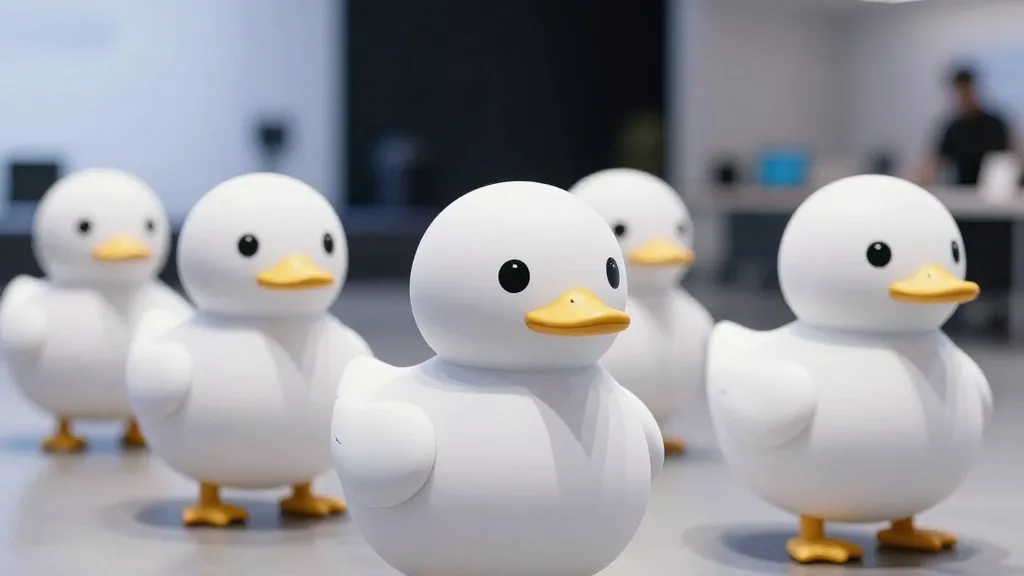
Jensen Huang’s casual interaction with a group of tiny robots during his recent keynote has ignited a frenzy in the consumer tech market.
The video, which circulated widely this week, captures the Nvidia chief playing with a flock of Microducks at the company’s GTC Berlin event. The small devices are equipped with basic locomotion and sound capabilities, allowing them to waddle, emit high-pitched beeps reminiscent of R2-D2, and perform specific movements like sitting, falling over for a simulated nap, or executing somersaults upon receiving voice commands. The charm of these interactions proved to be a significant marketing catalyst. By the day following the keynote, preorders for the devices had already exceeded 20,000 units, according to Clem Delangue of Hugging Face, who shared the milestone on social media.
The rapid uptake suggests that the Microducks are positioning themselves as a top contender for the upcoming holiday season. Since the units are expected to arrive in time for Christmas, retailers and analysts are closely watching whether they will claim the title of the best-selling robot of the year. Delangue has expressed confidence in their commercial potential, noting that the appeal extends well beyond the traditional toy demographic. Promotional materials for the device feature adults engaging with the robots, indicating a broad market appeal that transcends age groups.
The Microducks are developed by Pollen Robotics, a company that was acquired by Hugging Face in 2025. With Nvidia’s purchase of Hugging Face in September of this year, the robot manufacturer is now effectively part of the GPU giant’s portfolio. This marks the second robotic product to emerge from the Hugging Face ecosystem, following the introduction of the Reachy Mini. The open-source nature of the Microducks allows for significant customization and community engagement, distinguishing them from closed-system competitors in the smart toy market.
Technically, the robots were trained using Nvidia’s proprietary technology stack. During the development phase, simulations were used to teach the devices fundamental behaviors such as walking, sitting, and standing. These pre-programmed tricks are included in the standard shipment. However, the open-source framework enables owners to teach their specific units new maneuvers and behaviors. Users can then share these custom-trained skills with the broader community, fostering a collaborative environment for robot programming.
The timing of this viral moment is notable within the broader context of the artificial intelligence industry. This week has been marked by significant concern over the role of AI in recent cyberattacks, leading to a generally cautious atmosphere in the sector. The lighthearted nature of the Microduck video provided a welcome contrast to the more serious discourse surrounding AI security and risk. The footage offers a glimpse into the more playful side of machine learning, demonstrating how advanced technology can be packaged in an accessible and entertaining form.
The combination of technical innovation and genuine charm has created a compelling narrative for the Microducks. As preorders continue to climb, the device is set to become a focal point for holiday gift-giving. The success of the launch underscores the power of executive visibility and social media virality in driving hardware adoption. For consumers, the Microducks represent a new category of interactive entertainment that blends robotics with open-source community features.
Looking ahead, the focus will shift to the fulfillment of these orders ahead of the holiday rush. Manufacturing and shipping logistics will be critical in meeting the demand generated by the recent publicity. If the robots maintain their momentum, they could redefine the expectations for consumer-grade robotics in the coming years. The industry will be watching to see if the initial hype translates into long-term user engagement and repeat purchases, solidifying the Microducks as a staple in the smart home and toy markets.
Source: TechCrunch